The Sniffari: Why Slower Walks Create Calmer Dogs


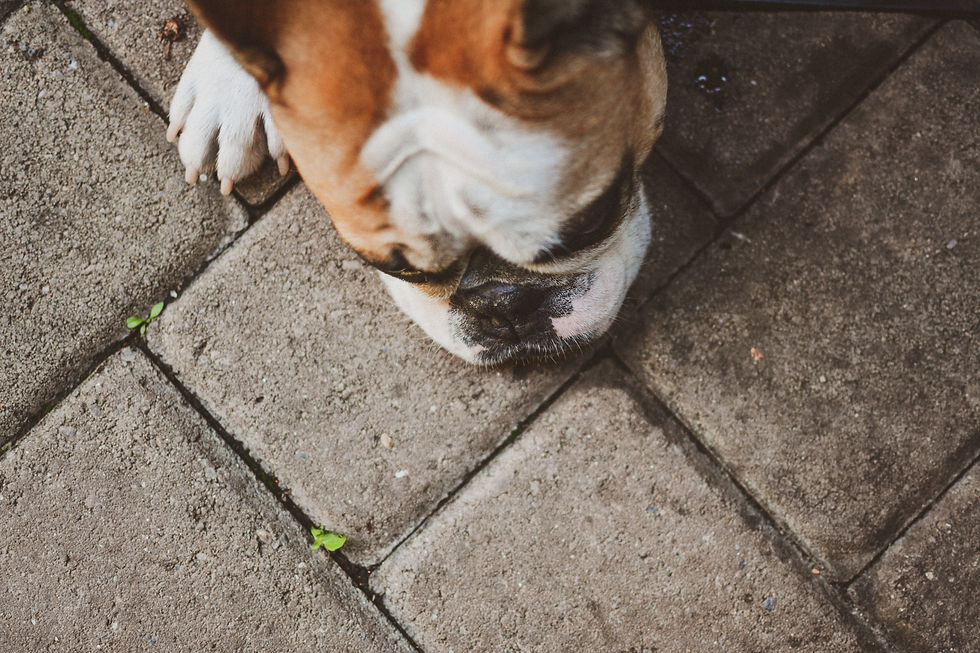
There’s a moment on certain walks where everything shifts. The leash loosens, the pace slows, your dog drops their head and starts to sniff.
Most people interrupt that moment.“Come on. Let’s go.” “We need to keep moving.”
But what if that moment is the whole point?
Welcome to the sniffari - a silly little name for a different kind of walk, and one that can completely change your dog’s behaviour, confidence, and emotional state.
What Is a Sniffari?
A sniffari is a walk led by your dog’s nose. Its goal is not distance, not speed, not a step count. Instead of rushing from A to B, your dog is allowed to pause, investigate, and process the world through scent the way they were designed to. It might look like you’re “not getting anywhere.” But something important is happening. Your dog is thinking.
Why Sniffing Matters (More Than You Think)
Dogs don’t experience the world the way we do. Where we rely on sight, dogs rely on scent. They have up to 300 million olfactory receptors (compared to our 5 to 6 million), and a significant portion of their brain is dedicated to processing smells. It's like if humans could smell colours! So when your dog stops to sniff a patch of grass, they’re not being stubborn - they’re reading the news. They're learning who’s been there, what they were feeling and how long ago they passed through. Sniffing is information and processing that information is mentally engaging.
The Science: Sniffing and the Nervous System
Here’s where it gets interesting: Sniffing isn’t just enriching, it’s regulating. Research in canine behaviour and cognition (including work highlighted by Alexandra Horowitz and studies from institutions like University of Veterinary Medicine Vienna) shows that scent-based activities:
Lower heart rate
Reduce stress signals
Increase calm, exploratory behaviour
Provide meaningful mental stimulation
This is why a slow, sniff-heavy walk can leave a dog more settled than a long, fast-paced one. The walk becomes not about burning energy but about processing it.
Why Fast Walks Can Sometimes Backfire
The world is already intense for dogs. New smells, traffic, other dogs, heat, noise.
When we rush them through that environment, we’re asking their nervous system to keep up without giving them a way to process it. This can result in pulling, reactivity, hyper-alert behaviour and difficulty settling at home. Not all dogs need more exercise. Some of them, especially anxious and sensitive dogs, may need a different kind.
What a Sniffari Actually Looks Like
A true sniffari doesn’t look impressive. You won’t cover much ground. You won’t break a sweat. Instead, it looks like a dog pausing at a tree for a full minute, a slow zig-zag path instead of a straight line, a loose leash, not constant correction. There are many of moments of stillness between movement.
It’s not inefficient. It’s intentional.
“But Don’t Dogs Need Exercise?”
Absolutely. But not all exercise needs to be fast, intense, or structured.
A sniffari still provides gentle physical movement, joint-friendly activity (especially important in the UAE's often intense heat and for senior dogs) and mental stimulation that tires them in a deeper way. A mentally fulfilled dog is often more relaxed than a physically exhausted one.
How This Fits the Calm Canine Rhythm
At Patsy & Tony’s, this is how we walk dogs. Not rushed. Not forced. Not one-size-fits-all.
We follow what we call the Calm Canine Rhythm, which is a balance of movement, rest, and regulation that supports your dog’s nervous system, not just their energy levels.
Because behaviour isn’t solely about training. It’s about how a dog feels in their environment. And sniffing plays a bigger role in that than most people realise.
Is This the Kind of Walk Your Dog Needs?
Not every dog thrives on fast, structured exercise. Some dogs need space. Some need time. Some need to slow down enough to feel safe again.
A sniffari gives them that.
It turns the walk from something they endure into something that actually fulfils them.

Comments